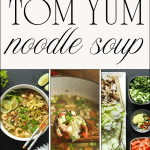
![Tom Yum Noodle Soup [High-Protein Thai Soup]](https://d7q3z8w7.delivery.rocketcdn.me/wp-content/uploads/2026/01/tom_yum_noodle_soup_wrordpress_featured-1200x550.jpg)
This high-protein Tom Yum Noodle Soup is everything I love in a weeknight meal: brothy, spicy, and super comforting, without being heavy.
This soup packs in bone broth, shrimp, and tofu for protein, loads up on vegetables, and layers in citrus, heat, and savoriness. It’s the kind of soup you crave when you want something nourishing, yet still exciting and full of flavor.
If you love asian soups, you have to try my Chicken Manchow Soup and Roasted Garlic Miso Soup recipes!

I designed this recipe to be approachable and realistic. No travel to a specialty grocery store is required (unless you are able and want to)!
Instead of harder‑to‑find galangal and kaffir lime leaves, I use fresh ginger and lime zest, which you can grab at any grocery store. The result is a soup that still delivers that signature tom yum flavor, and honestly, I think it tastes even brighter! 🍋🟩🫚
The soup is high-protein, gut-friendly, and perfect for meal prep. I know you’ll love it!
Just a heads up: some of the links on this site are affiliate links. This means that if you click on them and make a purchase, I may earn a commission at no extra cost to you. I only recommend products I genuinely love and use (or would use) myself, and your support helps keep this site going! Thank you so much!
Tom Yum Noodle Soup
Table of contents
The love for tom yum runs deep in our house! My husband Jon and I always order it when we’re at a Thai restaurant. When we lived in Florida, we ate it constantly, especially during the chaos of moving. There was a great Thai place near our hotel, and we went so often that they started to recognize us. 😂
Tom yum ended up being our last meal in Florida, which feels fitting now. After that, I knew I had to learn how to make it at home. This recipe is the result, and now I’m so excited to share it with you!
A Little Background on Tom Yum Noodle Soup

Tom yum is one of Thailand’s most well‑known soups, famous for its balance of hot, sour, salty, and savory flavors. It’s traditionally made with lemongrass, galangal, kaffir lime leaves, fish sauce, chilies, and lime, and often finished with shrimp (tom yum goong).
- Tom means to boil
- Yum refers to a spicy, sour flavor profile common in Thai soups and salads
While tom yum is often served as a brothy soup, it’s also commonly paired with noodles to make it more filling! This version (hence the title) uses noodles, but you can totally skip them for a low-carb soup tailored to your dietary preferences.
The Ingredients

Broth and Aromatics
- Homemade bone broth (or low‑sodium chicken broth) – The foundation of the soup. Bone broth provides collagen, minerals, and amino acids that support gut health and joints, while also giving the broth a fuller body and better mouthfeel.
- Lemongrass – Bright and citrusy with subtle herbal notes. It’s traditionally used in Thai cooking and is often associated with digestive support.
- Fresh ginger – Warm, spicy, and aromatic. Ginger is known for helping with digestion and reducing inflammation.
- Lime zest – Adds sharp citrus flavor in place of kaffir lime leaves. Lime zest brightens the entire soup and enhances freshness without added acidity.

Vegetables
- Onion – Builds a gentle sweetness in the broth as it simmers and adds antioxidants.
- Cabbage – Light, slightly sweet, and great at absorbing flavor. Cabbage is rich in fiber and supports gut health.
- Shiitake mushrooms – Earthy and deeply savory. Shiitakes are known for their immune‑supporting properties and natural umami.
- Roma tomatoes – Added at the end for freshness, light acidity, and a boost of vitamin C.
Protein
- Shrimp – Lean, quick‑cooking protein that keeps the soup light but satisfying. You can use fresh or frozen. I like using the small shrimp but you can use whatever size you want!
- Tofu – Adds plant‑based protein and makes the soup more filling without heaviness.
Fresh Herbs and Flavor Builders
- Scallions – Mild onion flavor with a fresh finish.
- Cilantro – Bright and herbaceous, commonly used to aid digestion.
- Thai basil – Slightly sweet and peppery with a fresh, aromatic finish.
Substitutions
- If you want to make this soup the more traditional way, use galangal instead of ginger if you have it. Galangal can usually be found at Asian grocery stores, international markets, or ordered online. Fresh galangal is best when sliced thin and added to the broth with the lemongrass, but dried galangal works too and is much easier to find. If using dried galangal, add about 1–2 teaspoons to the broth while it simmers, then strain it out before serving since it doesn’t soften like the fresh root.
- To make the soup more authentic, use Kaffir lime leaves instead of lime zest. Kaffir lime leaves are traditionally used in tom yum and can be found at Asian grocery stores, international markets, or online. If you’re using them, add 3–5 torn leaves to the broth while it simmers. Remove them before serving, since they’re very fragrant but not meant to be eaten!
- Swap shrimp for chicken, or use all tofu if you prefer
- Regular basil works in a pinch, though Thai basil is worth it if you can find it
Optional Add‑Ins
- Rice noodles, or high-protein chickpea noodles, or edamame noodles (add to individual bowls)
- Bok choy or spinach for more greens
- A squeeze of fresh lime juice right before serving
- A splash of fire cider for an added immune boost
- Kimchi or miso paste for added probiotics
- A splash of coconut milk for creaminess
How to Make Tom Yum Noodle Soup

This soup comes together in layers, and each step builds flavor. Take your time with the broth: that’s where the magic happens!
If you’re serving this with noodles, start them first so everything finishes around the same time.
Step 1: Cook the Noodles (If Using)
Bring a separate pot of water to a boil and cook your noodles according to package instructions. Drain and set aside. Keep them separate from the soup so they don’t soak up all the broth!
Step 2: Heat the Broth with Aromatics

Add the broth, lemongrass, ginger, onion, Thai chiles, lime zest, and salt to a large pot or Dutch oven. Bring to a gentle simmer, partially covered, and cook for 15–20 minutes so the flavors really develop.
Step 3: Add Vegetables & Tofu

Stir in the cabbage, shiitake mushrooms, and tofu. Simmer for 5–7 minutes, just until everything softens but still has texture.
Step 4: Season the Soup

Add the fish sauce, sambal, and honey. Taste and adjust. You’re looking for salty, spicy, slightly sweet, and citrusy!
Step 5: Finish the Soup

Add the shrimp and tomatoes. Cook for 2–3 minutes, just until the shrimp turn pink and opaque.
Step 6: Fresh Herbs
Turn off the heat and stir in the scallions, cilantro, and Thai basil. Let the soup sit for a couple of minutes before serving.

More Asian-inspired soups to try:
Chicken Manchow Soup
FAQ: Tom Yum Noodle Soup
Yes, especially when it’s made at home! This version is packed with lean protein from shrimp and tofu, lots of vegetables, and a light, broth-based base. There’s no cream or heavy oil, and ingredients like ginger, lemongrass, mushrooms, and cabbage make it both nourishing and satisfying without feeling heavy!
Tom yum is traditionally spicy, but it’s very adjustable. You control the heat by how many chiles you use and how much sambal or chili garlic sauce you add. If you prefer mild, use one chile and start with less sambal. If you love heat, go all in.
It’s all about balance. A good tom yum broth hits salty, sour, spicy, and savory all at once. Traditionally that comes from lemongrass, galangal, kaffir lime leaves, fish sauce, chilies, and lime. In this recipe, fresh ginger and lime zest stand in beautifully and still give you that layered flavor.
While both are broth-based soups, they’re very different. Pho is Vietnamese and focuses on slow-simmered bones, warm spices like star anise and cinnamon, and a clean, gently savory flavor. Tom yum is Thai, brighter and more aggressive in flavor, with citrus, heat, and umami.
Absolutely. Rice noodles are a good choice, and to add even more protein, chickpea or edamame noodles work well, too. I used these edamame noodles in this recipe. It’s best to cook them separately and add them to individual bowls so the broth stays clear and fresh.
Yes. The broth and vegetables can be made a day ahead and stored in the fridge. Add the shrimp and fresh herbs when reheating so they stay fresh and tender.
Shrimp is the most common protein (tom yum goong), but chicken, fish, or tofu are also popular. This recipe uses shrimp and tofu for extra protein and texture.
You can. Swap the chicken broth for vegetable broth, use tofu only, and replace fish sauce with a vegetarian fish sauce or soy sauce. The flavor will still be good!
Store leftovers in an airtight container in the fridge for up to 3 days. If you’ve added noodles, store them separately if possible to keep them from soaking up all the broth.

I’d love to hear about your experience with the Tom Yum Noodle Soup recipe! Please leave a question or recipe review, get in touch via email, and follow me on social media, as linked below.
You can also subscribe to the Heavenly Spiced email list to stay updated on new recipes, giveaways, life updates, and more! I’d love to have you! – Jenna 😊💌
More High-Protein Meal Prep Ideas:
Miso Butter Salmon [Quick & Easy Baked Recipe]
Instant Pot Mississippi Pot Roast
Beef Stuffed Shells [High Protein Cottage Cheese + Spinach]

Tom Yum Noodle Soup
- Total Time: 50 minutes
- Yield: 8 servings 1x
Description
A flavorful, nourishing, brothy tom yum-style noodle soup made with shrimp, tofu, vegetables, and bone broth, using easy-to-find grocery store ingredients like ginger and lime zest. Spicy, citrusy, and super comforting, this is a weeknight-friendly way to enjoy Thai flavors at home!
Ingredients
- 8 ounces noodles (rice noodles, edamame pasta, chickpea pasta, etc.)
- 10 cups homemade chicken bone broth (or your favorite store-bought)
- 1 small yellow onion (1 heaping cup), halved, sliced, then cut into squares
- 2 teaspoons fresh ginger, finely grated
- 2 pieces of lemongrass, smashed with the back of a knife
- 1 lime, zested and cut into wedges
- 2 teaspoons fine sea salt
- 2–3 Thai chilis, thinly sliced
- 2 heaping cups green cabbage (about 1/4 of a head)
- 1 heaping cup shiitake mushrooms, roughly chopped
- 1/2 block extra-firm tofu
- 2 tablespoons fish sauce
- 2 teaspoons sambal oelek or chili garlic sauce
- 1 teaspoon honey
- 1 pound shrimp (I use frozen small 70/100 wild-caught shrimp)
- 1 roma tomato, diced
- 1/2 cup scallions, sliced
- 2 tablespoons cilantro, chopped
- a handful of Thai basil leaves, torn (optional but recommended)
 Get Recipe Ingredients
Instructions
- Cook the noodles (if using): Bring a pot of well‑salted water to a boil. Cook noodles according to package instructions. Drain and set aside. Keep separate from the soup.
- Infuse the broth: In a large pot or Dutch oven, add bone broth, lemongrass, ginger, onion, Thai chiles, lime zest, and salt. Bring to a gentle simmer (don’t boil!) Partially cover and simmer for 15–20 minutes.

- Add vegetables and tofu: Stir in cabbage, shiitake mushrooms, and tofu. Simmer for 5–7 minutes, until vegetables are tender but not overcooked.
- Season the soup: Add fish sauce, sambal or chili garlic sauce, and honey. Stir and taste, adjusting seasoning as needed.
- Finish with shrimp and tomatoes: Add shrimp and chopped tomatoes. Cook 2–3 minutes, just until shrimp turn pink and opaque.
- Add fresh herbs: Turn off heat and stir in scallions, cilantro, and Thai basil.
- Serve: Divide noodles between bowls (if using) and ladle hot soup over the top. Serve immediately and enjoy!



Notes
- Keep the simmer gentle: A low, steady simmer keeps the broth clear and prevents the aromatics from turning bitter.
- Smash the lemongrass: Lightly crushing the stalks releases their oils and makes a big difference in flavor.
- Adjust heat at the end: Chiles vary a lot. Start modest, then add more sambal or sliced chiles once you taste the broth.
- Cook noodles separately: This keeps the broth from getting cloudy and prevents leftovers from turning mushy.
- Add shrimp last: Shrimp cook fast. As soon as they turn pink and opaque, they’re done.
- Taste before serving: Tom yum should feel balanced: salty, sour, spicy, and savory. A small splash of fish sauce or a squeeze of lime can bring everything together.
- Make-ahead friendly: The broth and vegetables can be made a day ahead. Add shrimp and herbs when reheating for the best texture and flavor.
- Cooking vessel: You can use a Dutch oven like me if you have one, but if not, any large pot will work.
- Prep Time: 15
- Cook Time: 35
- Category: Dinner, Lunch, soup
- Method: Stovetop
- Cuisine: Thai